


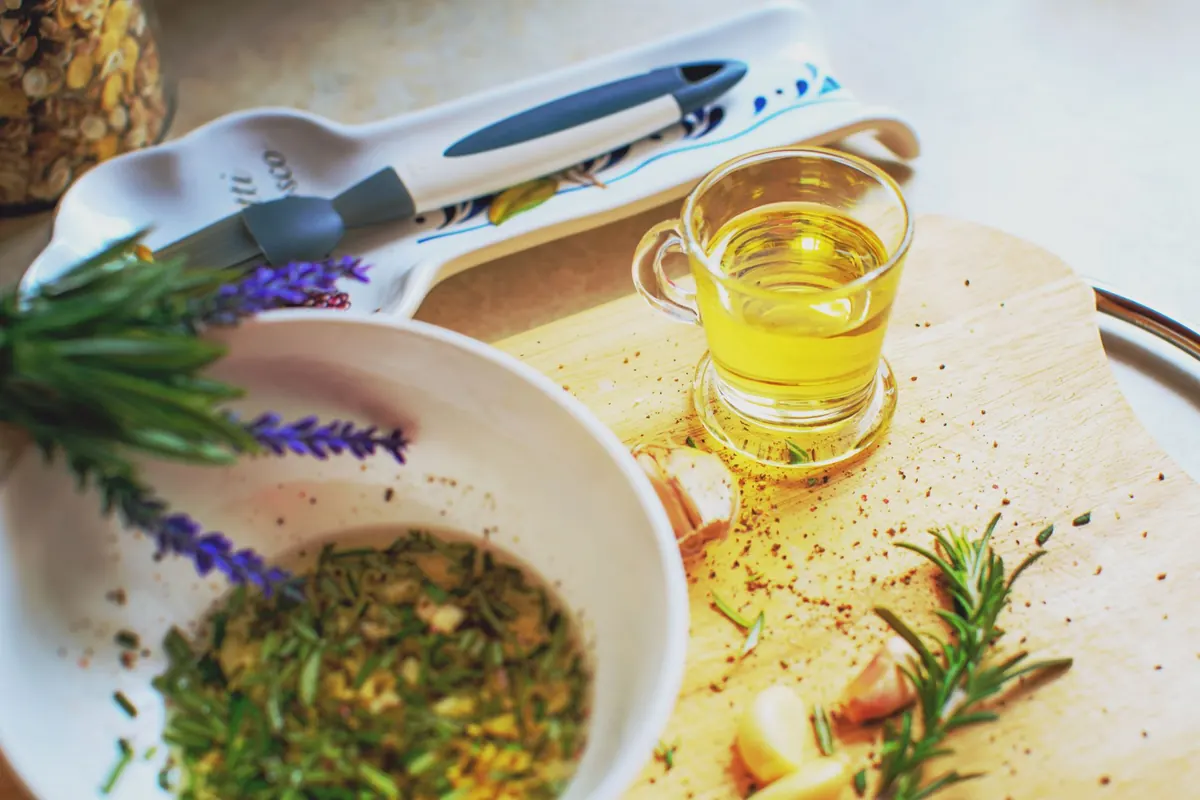



Most British kitchens run on one bottle of olive oil, and that bottle is asked to do everything: dress a salad, fry an egg, roast a tray of carrots and sit on the table next to the bread. One oil can manage all of that, but it will always be a compromise. Knowing what separates extra virgin from refined — because that is what the word "olive oil" on a label usually means — makes it far easier to decide where to spend your money and where to save it.
What extra virgin olive oil actually is
Extra virgin olive oil is olives, crushed and pressed. Nothing is added and nothing is stripped out. To carry the name, a bottle has to meet a standard: low free acidity, measured as oleic acid, and a clean flavour with no defects. In practice, that means the oil tastes of the fruit it came from.
Good extra virgin has layers to it. Grass, artichoke, tomato leaf, green almond, sometimes a flicker of banana. The peppery tickle at the back of your throat comes from polyphenols, and it is one of the clearest signs of fresh oil. Colour tells you much less than people assume — a deep green bottle is not automatically better than a golden one, since shade depends on the olive variety and how ripe it was when picked.
What refined olive oil is
Refined olive oil has been treated to remove flavour and faults. Heat, filtration and other processes strip out free fatty acids along with anything bitter, musty or muddy. What is left is pale, neutral and stable.
You will rarely see it sold on its own. What sits on the supermarket shelf as "olive oil", "pure olive oil" or "light olive oil" is normally refined oil blended with a small proportion of virgin or extra virgin oil to give it some character. Two things are worth remembering. "Pure" is a marketing word rather than a category, so it does not mean better. And "light" refers to flavour only — the fat and calorie content is the same as any other olive oil.
Flavour: the difference you can taste
Put a spoonful of each side by side and the gap is obvious. Extra virgin is assertive and changes with the harvest, the region and the olive. A Greek oil can be fierce and green; a milder Italian or Spanish bottle might be rounder and more almond-like. Refined oil tastes of very little — faintly buttery, slightly oily, and deliberately forgettable.
That neutrality is not a flaw. If you are cooking a strong curry or a punchy tomato sauce, a robust extra virgin can clash and muddy the result. Where extra virgin earns its place is anywhere the oil is part of the dish rather than just a cooking medium: torn mozzarella, a bowl of white beans, grilled fish, a plate of tomatoes, a slice of sourdough. If you have ever wondered why a restaurant salad tastes better than the one you make at home, the oil is often the answer.
Smoke point: the myth worth clearing up
Myth: you cannot fry with extra virgin olive oil. The smoke point of a decent bottle sits comfortably above the temperature of most home cooking.
A fresh extra virgin oil starts to smoke somewhere around 190–210°C, depending on the bottle. Refined olive oil holds on a little longer, closer to 230–240°C. Now compare that with the temperatures you actually cook at. A gentle sauté sits around 140–160°C. Shallow frying is usually 160–180°C. Even a fairly hot pan for searing rarely goes beyond 200°C for long.
Smoke point also drops as oil degrades. Fresh oil smokes higher than oil that has already been used twice, which is why reused fat in a deep fryer turns dark and acrid so quickly. Extra virgin is also fairly resistant to breaking down in the first place, thanks to its monounsaturated fat and polyphenols. The old advice to keep it away from heat is out of date.
So what should you actually fry in?
For eggs, onions, mushrooms, a pan of potatoes, salmon fillets or a weeknight stir-fry, extra virgin works beautifully and adds flavour. For a large pan of deep frying — chips, doughnuts, batches of fritters — refined or blended olive oil is the sensible choice. It is cheaper, more neutral, and you are not paying for delicate aromas you will never taste under a crust.
Which oil for which job
- Salads, dressings, dipping: extra virgin, always. This is the one place quality is fully exposed.
- Pasta sauces, soups, beans: extra virgin, stirred in at the end for a fresh lift.
- Roasting vegetables, chicken, fish: extra virgin. The flavour holds up and the edges brown well.
- Shallow frying and sautéing: either. Extra virgin for flavour, blended olive oil for neutrality.
- Deep frying: refined or blended olive oil. Save the good stuff.
- Baking: a mild olive oil in a lemon or chocolate cake works well; a peppery extra virgin can taste odd in a plain sponge.
- Marinades: extra virgin, especially with garlic, herbs and lemon.
Buying and storing: getting your money's worth
Look for a harvest date rather than relying on the best-before line, and buy a size you will finish within a few months of opening. A large tin of everyday oil plus a smaller bottle of something special is usually better value than one expensive bottle you use sparingly for a year.
Heat, light and air are the enemies. Keep oil in a cool, dark cupboard rather than beside the hob, screw the cap down properly, and avoid leaving the bottle open while you cook. Dark glass or a tin protects it better than a clear bottle. There is no need to refrigerate it long term, though a spell in the cold will simply make it thicken — it will return to normal at room temperature. If it smells waxy, cardboardy or like old nuts, it has gone past its best and no amount of cooking will hide it.
The practical answer: two bottles, not one
If you take one thing from all of this, take the two-bottle approach. Keep a good extra virgin for dressing, finishing and everyday pan cooking, and a larger, cheaper blended olive oil for high-heat frying and any dish where you do not want the oil to make itself known. If you would rather keep things simple and only buy one, make it the extra virgin. It tastes better, it copes with almost everything a domestic kitchen throws at it, and it is the bottle you will actually enjoy using.
Start by tasting what you already have. Pour a little into a small glass, warm it in your hand, smell it, then sip. Once you know what your current bottle actually tastes like, choosing the next one becomes much less of a guess.
Photo: Tho-Ge / Pixabay