


An olive wood chopping board earns its place in a busy kitchen. It is dense, close-grained and warm under a knife, and it looks better as it ages. But it is not indestructible. Leave it soaking, ignore a dry patch, or store it flat against a damp worktop, and even the best board will start to look tired. The good news is that olive wood asks for very little: a quick wash, a proper dry, a drink of oil now and then, and somewhere sensible to live. This checklist is built for real homes, where nobody wants a twelve-step ritual after dinner.
Daily Habits: Wash, Dry, Stand Up
After chopping, scrape food scraps into the bin or compost. Wash the board by hand with warm water, a small amount of mild washing-up liquid and a soft sponge or brush. Do not leave it to soak in the sink while you eat. Olive wood absorbs water through cut marks and end grain, and prolonged soaking can raise the grain, encourage splits and leave the board feeling rough.
Rinse thoroughly under warm running water, then dry it with a tea towel. Stand the board on its edge so air can move around both faces. If you have a drying rack, use it. Laying a damp board flat on the worktop overnight traps moisture underneath, which is one of the most common causes of warping. For quick jobs such as bread or vegetables, a wipe with a damp cloth and an immediate dry is enough. After raw meat, fish or poultry, wash more carefully with hot soapy water and dry completely before storing. If you are unsure about food safety in your kitchen, follow official hygiene guidance for chopping boards and raw meat.
Weekly Reset: Ten Minutes, Once a Week
Pick a regular slot, perhaps after the weekly shop or on a Sunday evening. This is not a deep clean every time; it is a check-in. A short weekly routine stops small problems becoming permanent ones.
- Wash the board as usual, then dry it thoroughly with a towel.
- Stand it upright for half an hour so any hidden moisture can escape.
- Run your hand over the surface. If fibres feel raised, rub lightly along the grain with fine sandpaper, then wipe away the dust.
- Look at the edges and the end grain for small splits, dark patches or lingering smells.
- If the wood looks pale or dry, apply a thin coat of food-safe oil. Leave it for fifteen to twenty minutes, then buff off any excess.
- Check where the board has been living. Move it away from the dishwasher, sink or any damp cloth it has been resting on.
That is it. Ten minutes of attention once a week is usually enough to keep a busy kitchen board in good shape.
Monthly Deep Care: Oil, Wax and Inspect
Once a month, give the board a proper look. Wash it by hand and dry it completely. Hold it up to the light. Olive wood should look rich and slightly satin, not grey, chalky or thirsty. If water no longer beads on the surface, the wood is telling you it needs oil.
How to Oil an Olive Wood Board
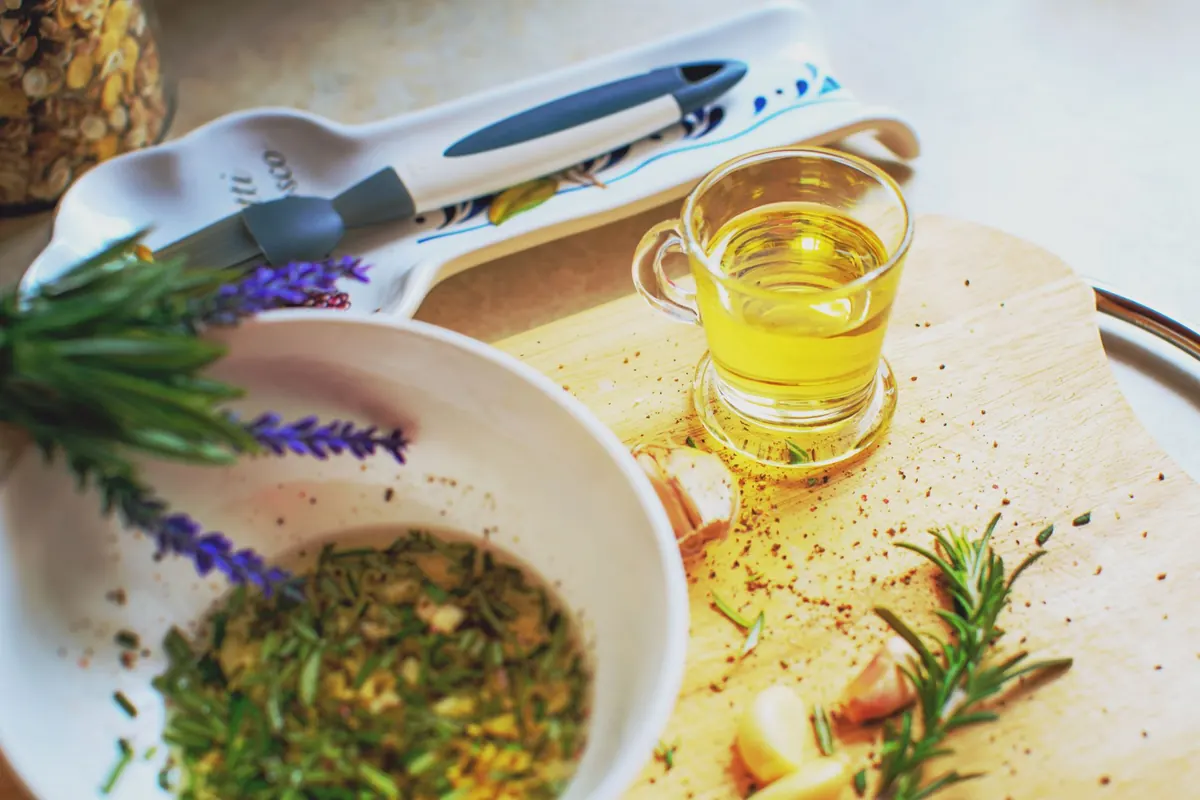
Use a food-safe mineral oil or a dedicated board butter made for wooden kitchenware. Avoid olive oil, sunflower oil and general cooking oils. They can turn rancid over time and leave a sticky film that attracts dust. Pour a small amount onto a lint-free cloth and rub it into the wood, working along the grain. Do not flood the board. Let it soak in for twenty minutes to an hour. If the board is very dry, leave it overnight, then wipe away anything that has not absorbed. Repeat the next day if it still looks pale.
When to Re-Oil
Monthly is a guide, not a rule. A board used every day for chopping may want oil every two to three weeks. A board used mainly for bread might need it every few months. Watch the surface rather than the calendar. If it drinks oil quickly, feels rough or looks washed out after cleaning, oil it. If it feels waxy or tacky, you have used too much; buff it firmly with a clean cloth and give it a day to settle.
A thin coat of beeswax-based board butter after oiling adds extra water resistance. Apply it sparingly, let it firm up, then buff hard. Too much wax makes the surface tacky and can transfer onto food, so less is definitely more.
Storing Olive Wood Boards in a Busy Kitchen
Where the board lives matters as much as how you wash it. Store it upright on its edge, with air moving around both faces. A narrow slot, a plate rack or a clear space against a wall all work well, provided the board cannot slide or fall. Avoid stacking it flat under other boards, especially if any of them are still damp. If you must stack, wait until every board is bone dry and place a cloth or felt pad between them.
Keep olive wood away from direct heat and strong sunlight. A spot above the oven, beside a radiator or on a sunny windowsill can dry the wood too quickly and lead to cracks. Never store a board in a plastic bag or sealed container. Wood needs to breathe. If your kitchen is short on space, choose one dedicated spot and return the board there every time, rather than leaving it on the drainer for days.
What to Avoid: The Short List
- Dishwashers. High heat and long soaking can warp, crack and strip the finish.
- Soaking in the sink. Even a short soak can raise the grain.
- Harsh chemicals. Bleach, oven cleaner and abrasive powders can damage the wood and leave residues.
- Cooking oils for conditioning. They can go rancid and leave a sticky surface.
- Direct heat. Do not rest hot pans or dishes straight from the oven onto the board.
- Prolonged sunlight. It can dry and fade the wood unevenly.
Monthly and Weekly Checklist
Keep this simple list somewhere visible, or copy it into your phone notes.
Weekly
- Wash by hand, rinse and towel dry.
- Air-dry upright for at least thirty minutes.
- Check for rough patches, splits or lingering odours.
- Oil lightly if the wood looks dry; buff off excess.
- Move the board if its storage spot is damp, hot or crowded.
Monthly
- Deep clean with warm soapy water and a soft brush.
- Dry completely, then inspect edges, grain and deep cuts.
- Sand lightly along the grain if fibres have lifted, then wipe away dust.
- Apply food-safe oil, let it soak, then buff.
- Add a thin wax coat if you use board butter, then buff again.
- Check storage for heat, moisture or pressure marks.
If the board still smells of onion or fish after washing, a paste of bicarbonate of soda and water can help. Rub it in gently, rinse well, dry completely and oil. If a crack is deep, or the board is splitting apart, stop using it for raw meat. Retire it for dry goods such as bread, or replace it. For any food safety concerns, follow official kitchen hygiene advice.
Make the Routine Fit Your Kitchen
The best care routine is the one you actually follow. Keep a small bottle of food-safe oil and a clean cloth near the board, so oiling does not feel like a project. Wash and dry as you cook, stand the board up to air, and give it a proper look once a week. Once a month, oil it, inspect it and check its storage spot. A well-cared-for olive wood board darkens, smooths and becomes more useful with every year. Treat it as a working tool rather than a fragile ornament, and it will serve your busy kitchen for a long time.
Photo: ArtHouse Studio / Pexels